














 Jonathan BrookePrincipal Broker / Owner
 Alani GalantoTransaction Coordinator
 John ShepherdAgent
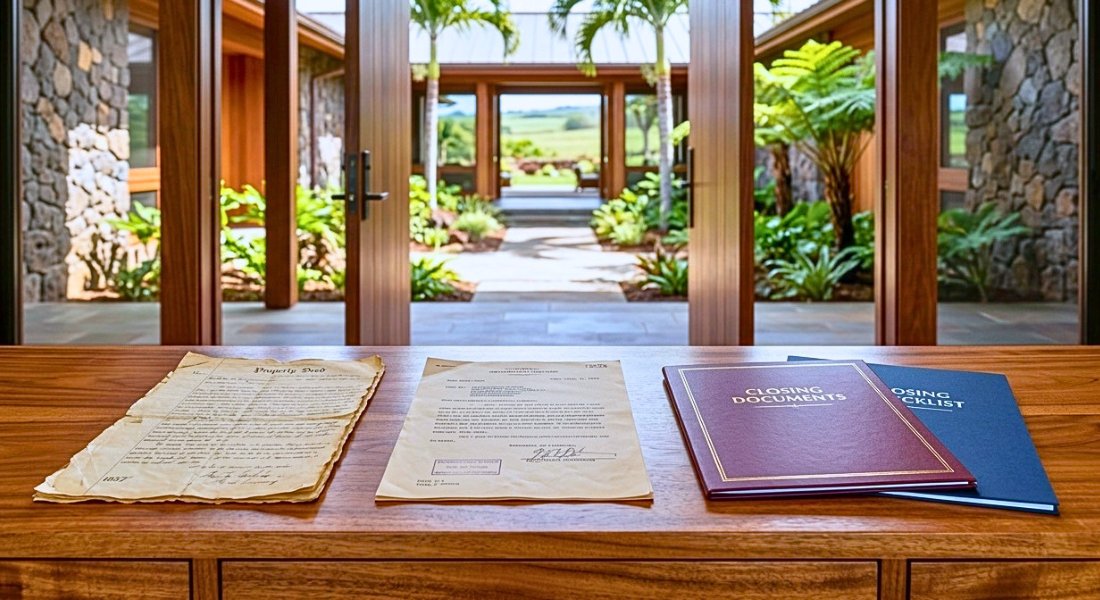
A title cloud traced to 1857 should kill a deal: no insurance, a broken chain of ownership, outside parties circling for a payout. Most brokers walk away quietly and let the seller take a discounted offer with an asterisk attached. Some transactions, though, reward the broker willing to stay in the problem. Hawaii title insurance denials are that kind of test.
A title insurance denial does not automatically end a real estate transaction on Hawaii's Big Island. With enough effort and patience, you can sometimes clear a clouded title and sell a property at full value. This is what that process actually looks like.
The Impact of a Title Cloud on A Hawaii Real Estate Sale
When a title company declines to issue insurance, the property becomes nearly impossible to sell at full market value. Any buyer spending hundreds of thousands of dollars needs defensible ownership, proof that no one can appear later and claim a competing interest.
Without that insurance, a known title defect invites outside parties to insert themselves. They'll assert a fractional claim and demand payment to disappear. It is a documented pattern in clouded title situations across Hawaii, and it played out in a recent Kohala Brokers transaction.
The property was a farm with real character and obvious value. The title process surfaced two breaks in the chain of ownership: one from 1857 and another from 1933. Both involved women who owned property, married, and predeceased their husbands. Through those marriages, they effectively transferred ownership without the documentation a modern title search requires.
The property passed through generations, and taxes were paid. But from a title insurance standpoint, the title chain was broken twice.
How Do You Clear a Title With 165-Year-Old Breaks?
Clearing a title with two breaks, one dating back over 150 years, can seem daunting. Seeing it through to a resolution required research, relationships, and a quiet title action, in that order.
Hawaii's land history is distinct from anything on the mainland. Title searches here trace ownership back to the original land grants issued during the Great Mahele of 1848, a massive reorganization of Hawaiian land tenure. The change created ownership chains with gaps, missing documentation, and transfers that were legally valid at the time but don't meet modern title insurance standards. Gaps from the 19th and early 20th centuries appear regularly in rural and agricultural properties across the Big Island.
I worked with attorneys, both established contacts and new ones, searching for a legal path forward. Some barely returned calls. The underlying question was complex, and there was no guarantee it resolved at all.
The breakthrough came through documentation research. A connected parcel in the same chain of title had already been cleared through a prior quiet title action. That precedent, combined with parallel ownership history, gave a title company enough to work with.
Insurance was eventually issued, but clearing the paper trail was only half the problem.
The Quiet Title Process Creates Its Own Risks
A quiet title action requires public notices, written outreach to potential heirs, and formal solicitation of sign-offs from anyone who might hold a claim. That publicity creates exposure. There are parties who monitor quiet title notices specifically to insert themselves into clouded title situations and demand money to disappear.
I navigated it all: the legal strategy, the buyer negotiations, and the outside claimants who pushed back once the deal was under contract. Before any of that resolved, months of work had already gone in with no guarantee of a closing.
"We had to navigate. I don't want to say shark-infested waters, but it was a very rocky coast to bring that vessel into harbor. At first we didn't think we'd be able to bring it in. We thought we'd just have to sell it with a clouded title for a more affordable price. But as things got cleared, we realized: holy moly, we've done it." – Jonathan Brooke, Owner and Principal Broker, Kohala Brokers
Not sure whether to proceed with a complicated Big Island property situation? Talk through the specifics with the team at Kohala Brokers before the complexity becomes a crisis.
These Transactions Require More From a Brokerage
Complicated deals don't resolve themselves, and the seller recognized this. Before title was clear and before the buyer negotiations had played out, the client voluntarily increased our compensation. They didn't have to pay more, but they recognized that I went the extra distance to help them get the best outcome.
"Don't work for the commission. Work for the closing. Work for your client, truly, and it was a hard lesson to learn, but I've believed it my whole career and I see it play out. This client said to me, 'Whatever is normal, we want to put an extra percentage on and make sure that goes to you.' That happened before we even had the clear title, before we had to wrestle with all these buyers. It was pretty incredible." – Jonathan Brooke, Owner and Principal Broker, Kohala Brokers
Does This Level of Complexity Come Up Often on the Big Island?
Most buyers and sellers will never face a title cloud traced to the mid-1800s. But most complex transactions share similar underlying dynamics. You'll find competing interests, incomplete documentation, outside parties creating friction, and timelines that don't cooperate.
What carries a deal across the finish line in those moments isn't charm or hustle. It's institutional knowledge, an honest network of attorneys, title officers, and county contacts built over decades. You also need the willingness and patience to stay in the problem until it resolves.
The team at Kohala Brokers routinely takes on transactions other brokerages won't stick with. One instance involved open permits left from the first Tesla solar roof installed on the Big Island. We also helped clients understand cesspool conversions for Hawaii properties. Each situation required a different combination of relationships, research, and persistence.
Finding those solutions is the work, and we're willing to take the time because we want our clients to get the best outcome. We offer that service to every client we represent, not just the complicated ones.
FAQs About Hawaii Title Insurance Denial
What does it mean when a title company denies title insurance in Hawaii?
A title insurance denial means the company has identified a defect in the property's ownership history that it won't insure against. In Hawaii, common causes include breaks tied to the Great Mahele land divisions, unresolved liens, missing heirs, or conflicting ownership claims. Without insurance, lenders typically won't fund a purchase loan, and buyers face legal exposure if a competing claim surfaces later.
Can a Hawaii real estate deal close without title insurance?
Cash buyers can legally close without title insurance, though it carries substantial risk. Financed purchases almost always require a lender's title policy. When insurance is initially denied, a quiet title action or additional legal research can sometimes resolve the underlying defect. Consult a qualified real estate attorney about your situation before proceeding.
What is a quiet title action in Hawaii real estate?
A quiet title action is a court proceeding that legally establishes ownership by resolving competing or unclear claims. This process involves publishing public notices and formally notifying potential heirs or claimants. Once a court confirms clear title, a title company can typically issue insurance on the property.
How far back do Hawaii title searches typically go?
Hawaii title searches trace ownership back to the original land grants issued during the Great Mahele of 1848. Hawaii's land history differs fundamentally from mainland states. As a result, title chains can involve gaps, missing documentation, and transfers that were legally valid at the time but don't satisfy modern standards. Gaps from the 19th and early 20th centuries appear regularly in Big Island agricultural and rural properties.
What are the risks of buying property with a known title defect?
Buying with a known title defect exposes a buyer to competing ownership claims, potential litigation, and loss of the purchase investment. It can also become an issue when you resell the property. In clouded title situations, parties who monitor public records sometimes assert fractional claims to extract settlement payments. An experienced local broker and a qualified Hawaii real estate attorney should both be involved before any such purchase moves forward.
Can the seller negotiate a price reduction to account for a title defect instead of clearing it?
Yes, and this might be the best option for some transactions. A buyer willing to accept the risk of a clouded title may negotiate a significant discount. The trade-off is exposure: reselling later becomes difficult, lender financing is generally unavailable, and the buyer must defend any competing claims that surface.
When a Deal Looks Impossible, Local Experience Is the Variable
An insurance denial resulting from an 1857 title cloud is an extreme case. But the work it takes to resolve it is not. Every complicated transaction eventually comes down to whether the broker has the knowledge, the relationships, and the steadiness to stay in the problem.
Are you buying or selling on the Big Island and want representation that has navigated the full range of what this market can present? Start the conversation with Kohala Brokers. The complicated deals are where that experience shows up most.